01
A clearer picture
Sort through competing thoughts and feelings, recognize recurring patterns, and clarify what matters most to you.
When life changes, a relationship feels stuck, or a decision weighs on you, you don’t have to sort through it alone. Together, we’ll clarify what matters, explore your options, and work towards a practical next step that fits your life.
Your experience. Your questions. A next step that fits your life.
Explore support for your situation, see how conversations work, or send a brief introduction. You don’t need the right words to begin.
Cancer, growing up, relationships, conflict, career decisions, and leadership. Start with what you’re facing.
Explore ways to work together →A conversation in plain language, shaped around your situation, your priorities, and what you want to understand.
See how it works →
Explore ideas and stories that offer another way to think about change, responsibility, and the patterns in your life.
Explore the ideas library →
You do not need the right words. Start with what is real, what keeps returning, or what life is asking you to face.
Begin the conversation →“Sometimes the thing we fear most is guarding something we need.”
Start with what you need most. Together, we can work towards:
Sort through competing thoughts and feelings, recognize recurring patterns, and clarify what matters most to you.
Talk openly about what’s weighing on you, even when it’s difficult to explain or you’re unsure where to begin.
Turn what you discover into something you can use—a decision to consider, a boundary to set, or a conversation you feel more prepared to have.
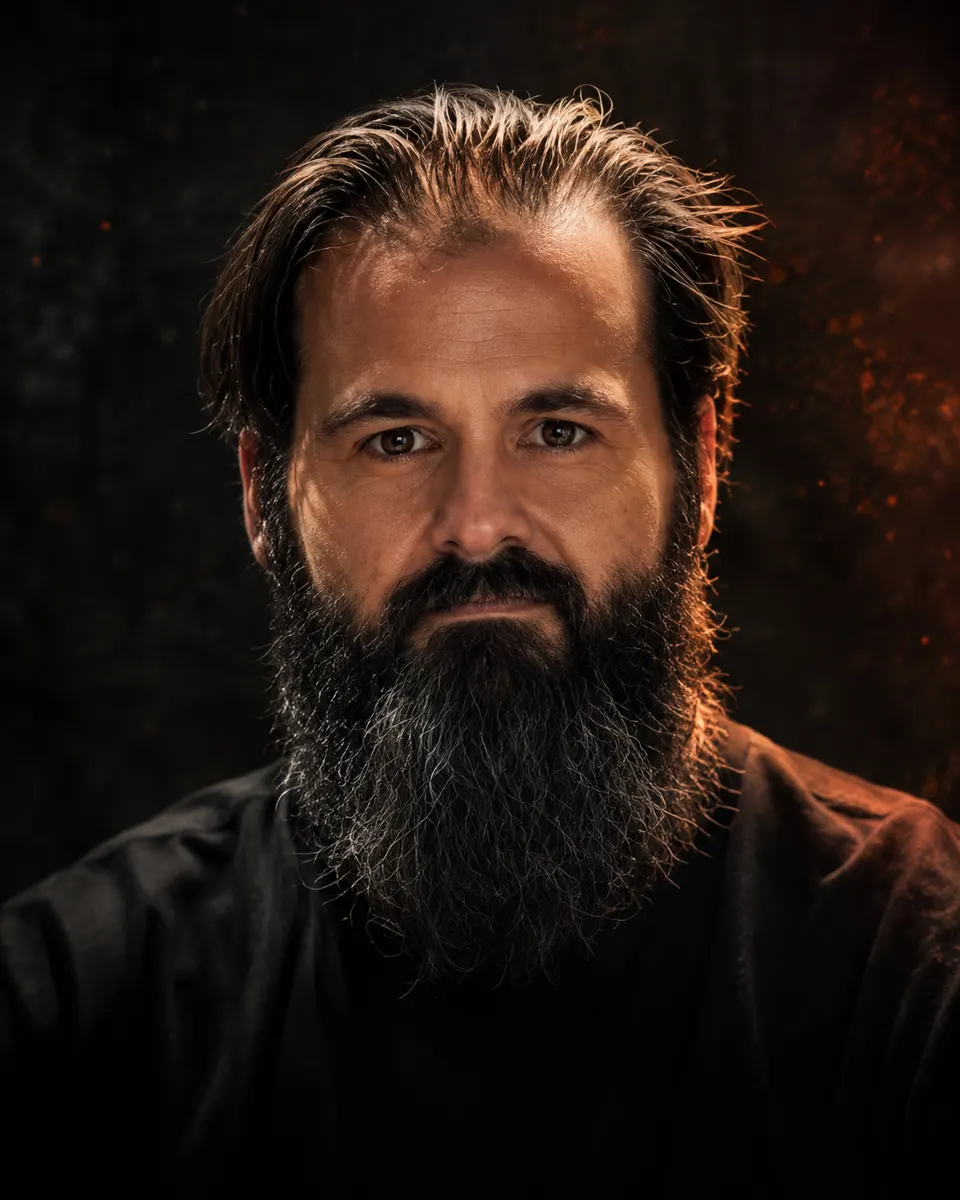
I’m Kristopher Reed, founder of Dragon Fire—an ironworker, martial arts practitioner, two-time Stage 4 cancer survivor, and student at Peterson Academy, where I focus on psychology, cognitive science, philosophy, theology, and sociology.
Our conversations focus on your experience, your questions, and what would be useful to you. There is room for difficult feelings, honest reflection, and a pace that respects where you are.
We may not choose the fire.
We can choose what we carry out of it.
Founder, Dragon Fire
I’m Kristopher Reed. I’m an Ironworker, Martial Arts Practitioner, and a two-time Stage 4 cancer survivor.
Those experiences inform the way I listen, but they do not tell me what your life has been like. We begin with your experience and what you want help understanding.
You can speak plainly about what feels difficult, unresolved, or important. You do not need to know the language of psychology or philosophy to take part.
We can explore different perspectives, notice patterns, and consider what a useful next step might look like in your life. The conversation follows your questions rather than a fixed story about who you should become.
The aim is to help you understand your situation more clearly and consider your own way forward.
My studies at Peterson Academy focus on psychology, cognitive science, philosophy, theology, and sociology, including courses with Dr. Jordan Peterson, Dr. W. Keith Campbell, Dr. John Vervaeke, and Dr. Roy Baumeister. Those studies sit alongside lived experience. I draw from different traditions without asking you to adopt a prescribed ideology or fit your life into a single approved framework. Ideas, stories, and symbols are tools for exploring a question; your situation remains the focus.
You bring a situation you want to understand. We begin with your experience—not a diagnosis, an institutional script, or a predetermined idea of who you should become.
Much of modern helping practice has become constrained by diagnostic systems, standardized methods, institutional policies, and prevailing social ideology. People can be categorized, managed, and taught the approved language for their experience while the deeper questions of meaning, character, responsibility, and hope receive less attention.
Dragon Fire takes a different path. I do not begin by deciding what label fits you or which established framework should define your story. I listen, question, challenge, and think with you as an individual. The aim is not conformity. It is to help you recover your own judgment, recognize what is true in your life, and find a direction you can genuinely stand behind.
There is no approved script to perform and no institutional language you must adopt. You can begin with what feels tangled, difficult, or unfinished. We take time to understand the situation before deciding what it means.
Questions, challenge, and different perspectives can help you notice what is important, where a pattern may be repeating, and which choices are genuinely available to you.
If an idea is worth using, it should be possible to say it clearly and level with one another about it.
Make room for difficult questions at a pace that respects what you are ready to explore.
Work, family, conflict, illness, responsibility, fear, and ordinary pressure are where these ideas must prove themselves.
Depending on what you bring, we may work towards clearer priorities, a conversation you want to prepare for, a boundary to consider, or a next step you can try. You remain the person who decides what fits your life.
Separate your own priorities from expectations you may have been carrying.
Look at different ways to respond, including what is within your control.
A useful next step can be small: something to reflect on, say, or do.
Sometimes a story or symbol gives words to something that is hard to describe. We can draw on these ideas when they help you understand your experience; you do not need to adopt a belief system or study a theory.
Story does not replace precision. It gives us another way to recognize ourselves. Sometimes a concept brings clarity. Sometimes a symbol brings recognition. Both can illuminate the path.
A useful conversation gives you something to return to after it ends. That might be:
You do not need a complete plan to get started. Tell me what is happening and what you hope to get from working together.
Long before psychology had technical language, people used story, myth, symbol, and philosophy to describe what it means to suffer, change, confront ourselves, and become.
A famous line can become so familiar that we stop hearing it. Dragon Fire looks at quotations as entry points: Who said it? What were they arguing? What does the idea reveal, and where might it fail?
“That which does not kill me, makes me stronger.”
Often reduced to a motivational slogan, Nietzsche’s line is more interesting as a challenge. Suffering does not automatically improve us. The question is what kind of person emerges from the encounter.
“Where id was, there ego shall be.”
The original German, Wo Es war, soll Ich werden, has generated competing translations. That tension is useful: what was hidden, automatic, or unknown may become something we can see, name, and take greater responsibility for.
“In that responsibility, and not in rights, resides Meaning itself.”
Peterson connects meaning to voluntary responsibility rather than passive discovery. Dragon Fire does not treat that as the only answer, but it is a powerful question to carry into a life that feels directionless.
“Meaning is found, not given.”
Other people can offer maps, language, theories, and stories. They cannot live our life for us. Meaning takes form in what we confront, what we choose, and what we do with what has happened.
The goal is not devotion to a school. It is to take strong ideas seriously enough to understand them, question them, and test them against real life.
The Shadow in ordinary life, projection, individuation, archetype, dream, symbol, and the parts of ourselves that resist recognition.
Self-overcoming, suffering, inherited values, nihilism, becoming, and the danger of living by answers we have never examined.
The unconscious, repression, defence, desire, and the unsettling possibility that the story we tell about our motives is not the whole story.
Acceptance, congruence, empathy, honest encounter, and what can happen when a person is met without being reduced to a diagnosis or theory.
Assimilation, accommodation, cognitive structure, and the moments when experience forces us to reconstruct the way we understand the world.
Responsibility, meaning, order and chaos, mythology, personality, and the relationship between ancient stories and modern psychological life.
Narcissism, status, self-perception, personality, and how the stories we tell about ourselves interact with the people around us.
Beauty, relevance realization, insight, flow, and the transjective fit between perceiver and world through which meaning becomes intelligible.
Meaning, belonging, self-control, agency, and the four needs through which life becomes meaningful: purpose, value, efficacy, and self-worth.

What have I refused to see?
What is life asking me to confront?

What must change, burn away, or be remade?
What am I afraid to approach?

What becomes possible if I do?
Tell me what you would like help with.
A brief introduction is enough. Share what is happening and what you hope would be different. We can discuss whether Dragon Fire is a good fit and what working together would involve before you decide.
Ask about working togetherYou might recognize your situation here, or need something harder to put into words. Start with what matters to you.
A major decision, transition, or change has made the old map feel unreliable.
You can see something happening again and again, but understanding why has not yet changed it.
Illness, loss, failure, or another difficult experience has changed the questions you are asking about your life.
You know something needs to move, and you want to think clearly about what is yours to carry and what action comes next.
You want to prepare for a difficult conversation, understand a recurring disagreement, or explore what you need from a relationship.
You are figuring out who you are, what matters to you, or how to respond to pressure and expectations.
There is no script you have to perform and no theory you have to adopt. We begin by making the situation clearer.
What happened? What keeps happening? What feels unresolved, confusing, or important?
Look at what keeps happening, the assumptions you are making, and what matters most to you.
Consider different ways to understand or respond to the situation, using examples from your everyday life.
Insight matters. Integration asks what responsibility, choice, experiment, boundary, or action follows from seeing more clearly.
Parents can begin with what they have noticed and what they hope could change. Teens and other visitors can begin with the question in front of them.
You don’t have to work it all out before reaching out.